A Human Resources executive recently posed a question about navigating employee travel with lingering concerns about the spread of COVID-19. State by state, country by country, business travel is beginning to resume, although in most places it is limited to travel considered essential. This HR executive was concerned about ways the company could support employees while thinking forward about what kinds of risk and liability could come from required travel. COVID-19 has opened a Pandora’s Box of risks for employee travel security that a great many organizations have not, in the past, explored in-depth.
When is the right time to put employees back on the road or air?
 There are no easy answers as travel resumes, but there are a few things companies should keep in mind. Aside from a general travel safety plan that can accommodate a wide range of employee needs, one of the key elements to successful navigation of this issue is already proving to be flexibility. For example, if remote work is not possible and employees must travel for their jobs, are there options available that might help them feel safer, and are they empowered to make those choices? For example, if they need to engage in domestic travel, are they able to choose whether to fly or drive? This recent article offers some valuable information that can help them make more informed decisions: https://www.npr.org/sections/goatsandsoda/2020/05/30/865340134/coronavirus-faqs-is-it-safer-to-fly-or-drive-is-air-conditioning-a-threat
Is your company able to make reasonable accommodations for employees who may have specific concerns about travel? Mandatory travel for jobs before the pandemic may need to adapt in order to address potential health and safety concerns. An immunocompromised employee, as an example, may not be able to resume business travel alongside other employees who do not share similar health concerns. Or, if they do, what reasonable accommodations may need to be provided? Some companies have strict travel parameters that must be adhered to when travel is booked: lowest fares, lowest cost rental vehicles, preferred hotels, even mandated use of ride share services to save on travel costs. Are policies and parameters able to flex to accommodate various employee health concerns?
All business travel can be accompanied by some risk. Not all risks can be anticipated and mitigated, but when it comes to employee travel safety, preparedness matters. The most important work companies can do right now, before the world re-opens entirely, is re-evaluate their “new normals” for all traveling employees. Because situations can be fluid when business travelers are on the road, it’s important to have options for emergency evacuations, local medical support and simple, rapid communication. As a society, we don’t know what we don’t know yet when it comes to the spread of COVID-19, but what we, the experts, know from experience is that there’s no such thing as too much planning when it comes to employee travel security.
IMG GlobalSecur Employee Travel Security Services
IMG GlobalSecur has decades of experience in the security industry. Our team of safety experts stands ready to help you alleviate travel fears with our corporate travel security services including executive travel security expertise and more. In addition, our FoneTrac safety app backed with 24/7 on-call security professionals can assist you in staying safe while away from home or office. Contact us today!
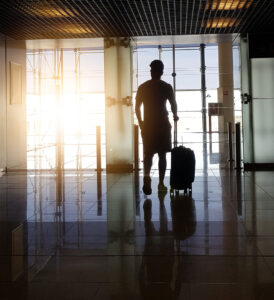 For a number of companies, business travel stopped entirely for a period of time. Organizations have scrambled to find short-term remote solutions. Now that travel is resuming it’s a good time to look at your emergency planning and ask how you can support your essential business travelers and help alleviate any fears they may have about their safety.
 A growing number of employees each year is adding leisure travel to business trips in an effort to reduce stress and burnout. It’s pretty clear that happy employees are more productive ones. As the Security Magazine article points out, a significant number of the surveyed employees struggled with varying aspects of business travel. It seems like a fairly benign solution to allow employees the freedom to add some self-care and entertainment into their business travel if it helps keep them happier…right?
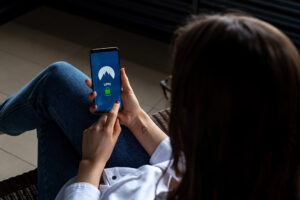 Well, we love our smart phones…which often contain a litany of personal data and for a lot of us, stored credentials. When we travel, that smart phone is often the only camera we take on our vacation. So for anyone who is reluctant to use a cheap “burner” phone, there are some things to consider. First, don’t plug your phone into any charging device you don’t own. Don’t use the stand at the airport, or the port in the base of the lamp in your hotel room. Use your own AC to USB charger. And if you have to use that USB port in the kiosk at the airport, make sure you use a USB data blocker. They are available online for about ten bucks…they attach to the end of your USB cable, and they block any attempts to read from or write to your device. You see that pop-up on your phone that says “Trust this computer?” Well, it’s because what you’ve plugged your phone into wants to exchange data with your phone. Do you really want all of your contact data downloaded into that rental car? You can prevent quite a bit by being careful about sharing…and that means guarding that connection carefully. In a worst-case scenario, if you’re traveling to any countries that are notorious for spying on visitors, I would say go ahead and get that cheap “burner” phone. The key is to understand the risk and take appropriate measures to safeguard your data.
 Particularly for clients in the Hospitality industry, the customer experience is significant. It’s what drives good reviews, repeat business and growth. The principle behind CIPHER is this: Connect. Interrupt patterns to influence Performance. Have an Experience that drives a Result.