The smartphone has become an indispensable tool for modern daily life, and its importance is magnified in the context of overseas travel for employees or executives should not be discounted. Whatever you need to do, “there’s an app for that.” Except when there isn’t, as when an employee is overseas, and her cell phone dies or gets broken and yet she needs it for important medical or travel security information. Whether she is in Germany, the UK, Iran, or China, it really doesn’t matter. That iPhone or Android device is her lifeline to the home office, and reassurance about her own travel security abroad.
Why so?
 Our phones can serve as translation devices, can help with figuring out monetary transactions and proper exchange rates, can function as a flashlight; the list goes on and on. And of course the phone can also work in it’s basic capacity as a communication device–you can always phone home! On account of this, everyone should consider the issue smart phone travel security beyond avoiding pick-pockets. There is a fly in the ointment: the phone turns into a mere paperweight if it runs out of battery charge. Given how important this tool can be in keeping you on track and functioning while traveling, it is imperative that you a good backup plan for keeping the phone alive.
Beyond simple things like running virus scans to prevent hackers, and making sure one has fresh batteries, there is the issue of the ‘there there.’ When she calls out, does anyone answer? With time differences and cultural differences, the last thing you want is an employee to face an emergency abroad and find ‘no one home’ when he or she needs help.
Smart Phone Travel Security Means Getting Live Updates
Smart phone travel security involves having a backup plan for staying charged up. What if your charging block overloads or shorts out due to power-grid fluctuations (not uncommon outside 1st-world countries)? What if the power just goes down and shows no sign of coming back up (not uncommon in 3rd-world countries)?
This basic level smart phone travel security can be handled with some clever 3rd-party tools. Solar-powered chargers can trickle-charge your phone. A good option most times, but this can be slow, and of course sometimes the sun just does not shine (at night for instance!).
Another option is a hand-cranked charger. The only limitation on your battery life then is how vigorously you can turn the handle (hint: it’s not that hard to keep it charged).
Beyond the ‘simple’ problems, there is the problem of just being aware of what is going on in the country. And the problem or challenge of reaching out for help as for instance during an employee medical emergency in Syria or Iran, and needing to find on-the-ground assistance. That’s where we come in.
One of the most important class of apps you be locked out of if your battery died would be those from IMG GlobalSecur. These provide updates on security issues realtime. Think about it this way: If the power is down, that’s precisely when you’d most want to know what is going on?
To see how our software can help you, to reach out to us and have one of our friendly staff conduct an employee overseas monitoring audit and demo the available software.

 BBR/BRU), reportedly near the American Airlines check-in counters. Preliminary reports state that at least one person was killed and dozens of others were injured in the explosions; some reports state that as many as 12 people were killed. Operations at EBBR have been severely disrupted; all outgoing flights have been canceled and all incoming flights are being diverted from the facility. Unconfirmed reports state that firefighters have discovered undetonated explosive devices at EBBR. The airport is being evacuated and the surrounding areas have been locked down. There are also emerging reports of an explosion at the Maalbeek metro station, which is located near European Union facilities in Brussels. Authorities are reportedly shutting down the metro system in response to that incident, although the cause of the apparent blast and its immediate effects remain unclear.
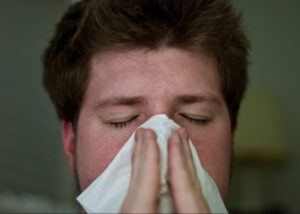 The day after arrival symptoms like fever started to manifest, but they put it down to lack of acclimatization to the tropical heat. One day two they were feeling distinctly worse, but of course there was work to do–the whole reason for the trip was business–and so soldiered on. By day three the flu laid them low, and in their weakened state they got a local bacterial infection from impure water, and they become dehydrated. Suddenly this traveler is at significant medical risk.